

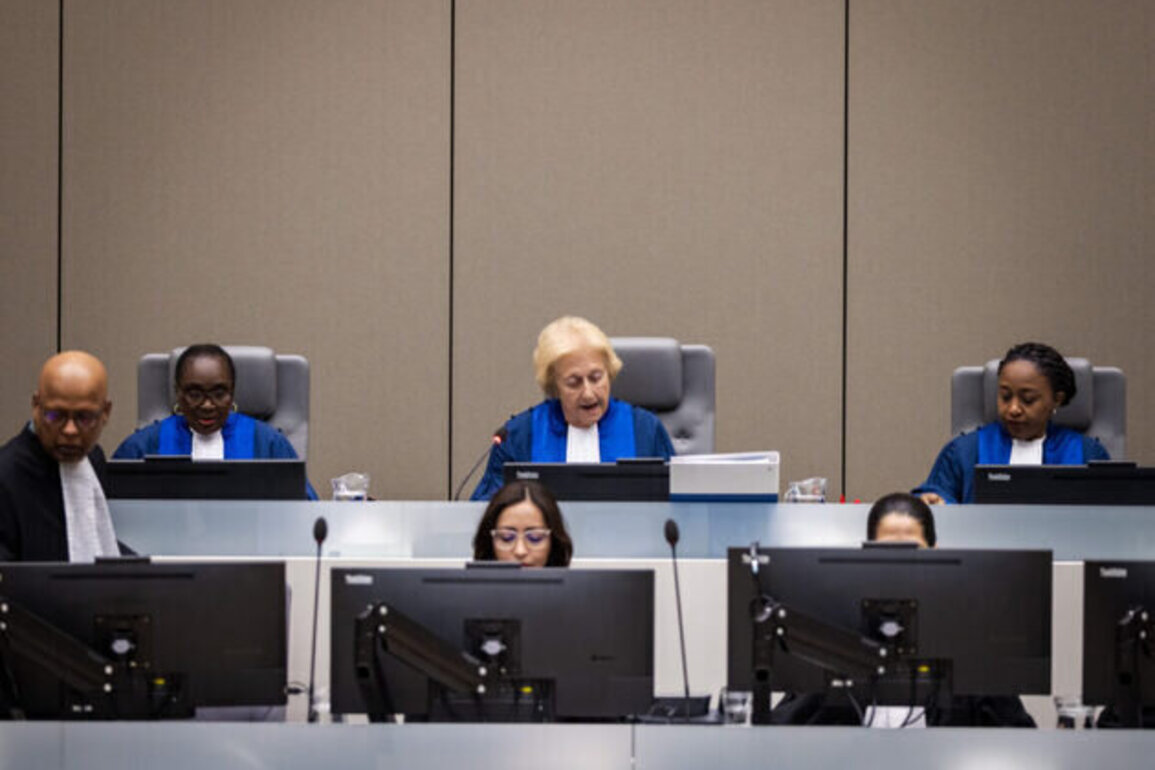
THE HAGUE, Netherlands (CN) - Former Sudanese militia chief Ali Muhammad Ali Abd-Al-Rahman, better known as Ali Kushayb, was sentenced Tuesday by the International Criminal Court to 20 years in prison for war crimes and crimes against humanity that ravaged non-Arab villages, two months after being found guilty of atrocities in Darfur.
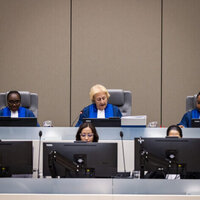
Reading out the decision, presiding Judge Joanna Korner said the court weighed "retribution and deterrence as the primary objectives of punishment at the court," emphasizing that retribution "does not mean vengeance or revenge, but is a recognition of the international community's condemnation of the grave crimes found to have been committed."
The 20-year sentence was shorter than the 30-year maximum allowed under international law, but it still marked a defining moment for the court's long-running Darfur probe, launched in 2005. Judges acknowledged the defendant's age, behavior in custody and decision to surrender, but said those factors could only marginally temper the weight of his crimes.
Abd-Al-Rahman, 76, stood silently as the sentence was read. He has been in ICC custody since 2020, and that time will be credited toward his prison term.
Competing arguments over sentence
Before deciding the punishment, prosecutors urged the judges to impose a sentence that matched what they called the sheer scale and brutality of the crimes.
They described Abd-Al-Rahman as "an enthusiastic, energetic, effective perpetrator" who carried out orders from senior Sudanese officials and led Janjaweed militias in attacks that wiped out entire communities. In their view, neither his age nor his claim of being a mere subordinate lessened his responsibility for the devastation he helped unleash.
The defense lawyers saw it differently, arguing that anything close to a life sentence would be excessive. They urged the court to impose "a finite and proportionate term of imprisonment that preserves the possibility of release," citing his age, health and family ties. They stressed that Abd-Al-Rahman was following government orders with little room to refuse, had no prior record and behaved well throughout the trial and his years in detention.
Representing the survivors, lawyer Natalie von Wistinghausen told the court that justice was "not an abstract concept" but the acknowledgment of a truth long denied to the victims. She said the sentence needed to reflect "the gravity, scale and impact of the crimes and their long-term consequences."
Gravity and mitigation
When weighing the evidence, the judges examined 27 separate counts covering everything from murder and rape to persecution, looting and degrading treatment during three major offensives in Darfur's Wadi Salih and Mukjar regions between August 2003 and March 2004.
Their conclusion was clear: Under Abd-Al-Rahman's command, Janjaweed fighters "systematically conducted operations against villages and towns in Darfur, inhabited primarily by members of the Fur tribe," whom Sudanese forces viewed as rebel supporters.
Judges said the scale and cruelty of the attacks made the crimes especially grave, noting how many victims were left defenseless. They rejected arguments that Abd-Al-Rahman deserved leniency for sparing women or helping a soldier long ago, saying those gestures carried little weight.
His background as a trained medic, they added, only deepened his responsibility because he used skills meant to save lives to destroy them instead.

The judges rejected the defense's claim that Sudanese law should determine his punishment, noting that under Sudan's current system, his age could have limited the sentence to just a few years or even a fine. They said that argument had "no foundation in the law of this court."
The panel also dismissed Abd-Al-Rahman's final statement, in which he vaguely mentioned the victims of 2003 and 2004, calling it "a calculated and insincere expression of empathy" meant to appear remorseful without accepting responsibility.
The man behind the Janjaweed
Born in 1949 in the South Darfur town of Rahad Al-Berdi, Abd-Al-Rahman rose from a Sudanese army officer to a feared militia leader as the government unleashed the Janjaweed on non-Arab villages in 2003.
What Khartoum described as a counterinsurgency campaign quickly became known worldwide as ethnic cleansing. About 300,000 people were killed, and millions were driven from their homes. At trial, witnesses told judges that Abd-Al-Rahman's fighters torched villages, executed men and raped women who were spared death.
When the International Criminal Court issued its first arrest warrants over Darfur in 2005, Abd-Al-Rahman was among four top commanders accused of war crimes and crimes against humanity.
He evaded capture for 15 years before surrendering in 2020. His trial began in April 2022, with dozens of survivors testifying from behind screens. On Oct. 6, judges convicted him on 27 counts, marking the court's first-ever Darfur conviction.
Justice delayed but not denied
For victims who had waited more than 20 years, Tuesday's sentence brought a long-delayed sense of justice. The judges said the 20-year term was "proportionate to Abd-Al-Rahman's specific circumstances, conforms with the purposes of punishment under the court's legal framework and adequately acknowledges the victims' suffering and harm."
They added that deterrence remains crucial "given the current state of affairs in Sudan," where clashes between the army and the Rapid Support Forces, a successor to the Janjaweed, have once again plunged the country into chaos.
In a statement after the ruling, the ICC prosecutor's office said it would closely review the written judgment before deciding whether to appeal. It reaffirmed its commitment to justice in Darfur, adding that investigators remain on the ground and are stepping up their work on new atrocities in western Sudan to ensure those responsible are held to account.
The court has now moved the case into its reparations phase, where judges will set procedures for survivors to seek compensation. The defense has already appealed the October conviction, and both sides now have 30 days to challenge the sentence.
Beyond the courtroom, the ICC's Darfur investigation is far from over, as clashes between Sudan's army and the RSF, the paramilitary force now fighting the government, continue to tear through communities and displace thousands, particularly in western Darfur towns such as El Geneina and El Fasher.
With the country once again engulfed in conflict, Tuesday's sentence closed one long chapter of the Darfur story - but the search for justice in Sudan is ongoing.
Courthouse News reporter Eunseo Hong is based in the Netherlands.
Source: Courthouse News Service