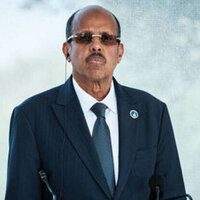



UN relief chief Tom Fletcher held useful and tough discussions with the two sides battling for control of Sudan this week, pushing for access to aid for those in desperate need, he told journalists in New York on Monday.
Just how many people are still trapped in the Sudanese city of El Fasher? Thats the burning question for relatives of the many thousands of people believed to still be there, since paramilitary fighters overran the regional capital of North Darfur last month, after a 500-day siege.
More than 21 million people in Sudan, 45 per cent of the population, are not getting enough to eat as the war between rival militaries continues, according to the World Food Programme (WFP).
In recent days the Emergency Relief Coordinator has travelled to various parts of the war-torn country and met leaders, frontline responders and survivors of the crisis.
We need more UN boots on the ground, Mr. Fletcher said.The UN is a ship that was not built to stay in the harbour, and this visit has been part of that big push to make sure we're mobilised closer to those we serve.
Progress on negotiations
Mr. Fletcher said he had a useful meeting with General Burhan, leader of the Sudanese Armed Forces (SAF), focused on getting unlimited and unhindered humanitarian access.
He also met representatives from the Rapid Support Forces (RSF) militia in what was a tough discussion, where he set out unequivocally that the UN will be expecting protection for civilians and insisting on accountability and safe passages for civilians and aid convoys.
We have, I think, a pretty strong agreement from the authorities [of the military government] in Port Sudan and the RSF on full access and safe passage for our convoys to go in and for civilians to get out, Mr. Fletcher said. Now let's see what happens next.
Crime scene in El Fasher
The UN also made progress on getting teams into El Fasher, in Darfur, on the organizations terms, Mr. Fletcher added.
Were not going to be instrumentalised, he emphasized.This is a potential crime scene, and we've got to make sure we've got the right people going in, and that the aid is genuinely neutral and impartial.
El Fasher was captured by the RSF last month after more than 500 days of siege, leading to the displacement ofsome 90,000 peoplesince the end of October.
When asked about the number of deaths in El Fasher, Mr. Fletcher said there is no credible answer on how many have been killed so far.
There are hundreds of thousands of people in Tawila, but many people clearly arent getting out of El Fasher, he said.
One of the things we want to do when we go in is to find out why that is and to see what the conditions are, in which they are being held there.