

Madagascar is experiencing its fifth political crisis since the island gained independence from France in 1960. President Andry Rajoelina fled the country on Monday after weeks of protest led by social media group Gen Z Madagascar, creating a power vacuum that hasallowedthe military to claim power a situation that feels like dj vu.
In a dizzying sequence of events, the situation inMadagascarescalatedrapidly. Addressing the country on national radio Tuesday, military leader Colonel Michael Randrianirinadeclaredthe military hadtaken power. He added thatitwas dissolving all institutions except the lower house of parliament, whicha short time earlierhad voted to impeach PresidentAndry Rajoelinafor desertion of duty after hefled the countryon Monday.
Weeks of unprecedented protests spearheaded by Gen Z Madagascar, a movement born on social media, set the scene for the spirallingpolitical crisisthe island is now facing.Demonstrations thatfirst erupted on September 25 overwidespreadwater and poweroutagesquicklyintensified. Thousands of young protesters took to the streets of the capital Antananarivo, their phone flashlights held high,railingagainst corrupt institutions andtheextremepovertythatplaguesa large part of Madagascar's population.
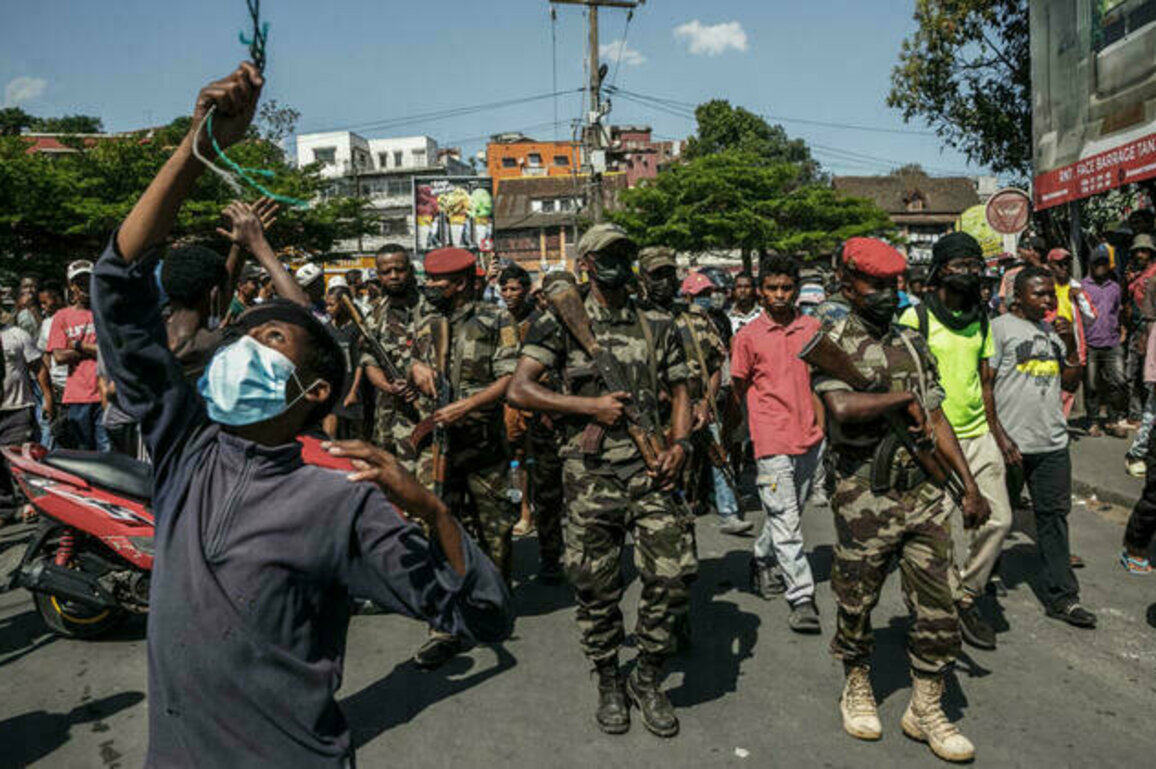
The situation took a turn last weekend, when President Rajoelinawarnedthat an attempt to seize power illegally and by force wasunder way.Meanwhile,Randrianirinas eliteCAPSAT(Corps d'arme des personnels et des services administratifs et techniques)military unit, which hadplayed a key role in bringing Rajoelina to powerin a 2009 coup,joinedthe protesters in the centre of the Madagascan capital andsaid they would disobey shoot-to-kill orders.
Read moreWho is Michael Randrianirina, the colonel who toppled Madagascar's president?
It is not the first timethat Madagascar has been mired in political upheaval.
Since gaining independence from France in 1960, the country has experienced a series of similar crises.Students overthrew former president Philibert Tsiranana's pro-French regime in the name of social justicein 1972.Civil service strikes and protestsin 1991once againforced the president at the time to resign, but thefledglingdemocracy was hamperedby the return of thesame elites.Charismatic entrepreneurMarc Ravalomananacame to powerin 2002with dreams ofamodern, opencountry.But in 2009 he was swept from powerby Rajoelina, a former DJ who had risenthrough the political ranks to become theyoung mayor of Antananarivo.
Empty promises
Now Rajoelina, controversially re-elected in 2023 amid an opposition boycott, has abandoned the presidency in much the same way as his predecessor reportedly aboard a French plane.
Regime after regime promises they will put an end to disorder, but winds up being the cause of it,saysArnaud Lonard,a historian specialising in Madagascars history.Every president promises to be a saviour, andevery generation takes to the streetsto chase themout. The only thing that has changed is that slogans used to be printed on leaflets, and now they are spread on social media. But the anger is very much the same.
Once again, that anger is being fuelled by the increasingly unbearable social and economic conditions the nation faces. Madagascar is still one of the poorest countries in the world, despite the 4.2 percent growth its economy saw in 2024 a paradox that became even less palatable after Rajoelinapromised to"improve the daily lives of the population", "increase wages" and "combat poverty".
Rajoelina's promises turned out to be empty. Seized by corruption and capital flight, Madagascar's economy offers very few prospects to its population, whose median age is 20.As basic infrastructure began to break down, young Madagascans had had enough.
Against this backdrop,water and power shortages fuelled outrage that pushed political mistrust to its limit.The connection between the people [of Madagascar] and its politics was already fraught, but now it is completely destroyed, says Christiane Rafidinarivo, associate professor of political science at Sciences Pouniversity inParis.
For Denis-Alexandre Lahiniriko, a historian and senior lecturer at the University of Antananarivo,these recurrent political crises can be traced back to the alienation that exists between the Madagascan state and its people. Madagascar has never succeeded in creating a socio-political structure its population identifies with, he explains.
Gen Z on the front lines
During the latest demonstrations, the military intervened to stop police from cracking down on protesters, says Rafidinarivo.They reshuffled the chain of command to ensure things didn't [escalate] after the police and military fired on each other on Saturday, she says.
Back in 1991 the military also played a key role, forcingpoliticians toreacha consensus and end the crisis. But this time around, it was young people who took to the front lines to hold the state accountable. What is new about this generation is how connected to the world it is thanks to social media. It can compare what is happening elsewhere by going online. And unlike previous generations, young people today have not been politically censored. Their slogan is,Weare rising up for our children'sland.They want change, says Rafidinarivo.
For his part, Lahiniriko thinks the demands put forth by the Gen Z movementlike changing the way Madagascar is governedare not based on concreteplans.The movement was inspired by crises it saw on social media, like what was happening inNepal[andMorocco]. But we must not forget that having electricity and running water is already a privilege most young Madagascans don't have, he says.
Read moreGeneration Z is stirring up rebellion across borders,from Morocco to Madagascar
Lahiniriko says that, without a strong leader or comprehensive ideology, the movement will likely dissipate quickly.It's too early to say, but the political elite could simply return to power,Lahiniriko says.
Thousands of protesters gathered on the capital's 13 May Squareon Tuesday, dancing, singing and waving banners. Colonel Randrianirina took the stageat one pointand asked: Are you ready to accept a military takeover?andthe crowd cheered.
As news of the takeover made its way amongtheprotesters, many were jubilant.
Were so happy Andry Rajoelina is finally gone... We will start again," high-school student Fih Nomensanaharytold Reuters, with four of her friends cheering alongside her.
Others were more cautious. "They need to hand over to a civilian administration quickly and have an election," said Rezafy Lova, a 68-year-old IT consultant.
This article was translated from theoriginal in FrenchbyLara Bullens.
Originally published on France24